February 19, 2026
Wondering if your budget stretches further in Alamance County than in the Triangle? You are not alone. Many buyers leave Durham, Chapel Hill, or Raleigh to gain more space while keeping access to Triangle jobs and amenities. In this guide, you will see clear price ranges, commute realities, space tradeoffs, and a quick test to decide which market fits you best. Let’s dive in.
Alamance County is typically less expensive than the core Triangle counties. Recent figures from major housing data providers show typical Alamance home values in the high $200s to mid $300s, depending on method and month. By comparison, county medians in Durham often land in the high $300s, Wake around the mid $400s, and Orange near the $500s. In percentage terms, Alamance commonly offers a 20 to 40 percent discount versus Wake and Orange, and a smaller discount versus Durham.
Inside Alamance, prices vary by city. Burlington often posts the lowest medians, commonly in the low to mid $200s up to the low $300s depending on the neighborhood and home age. Mebane and Elon run higher, with Mebane often in the mid $300s because of its proximity to the Triangle and active new construction. If you want the shortest Triangle commute from Alamance, expect to pay more in Mebane than in Burlington, Graham, or Elon.
The market has also cooled from the peak frenzy of earlier years. Recent regional coverage describes the Triangle as more balanced, with improving inventory and more negotiation room for buyers. You still see speed and multiple offers in certain pockets, but buyers generally have better choices today than in 2021 to 2022. For context on regional trends, see recent market notes on what is next for the Triangle housing market in 2026 from local reporting at Axios.
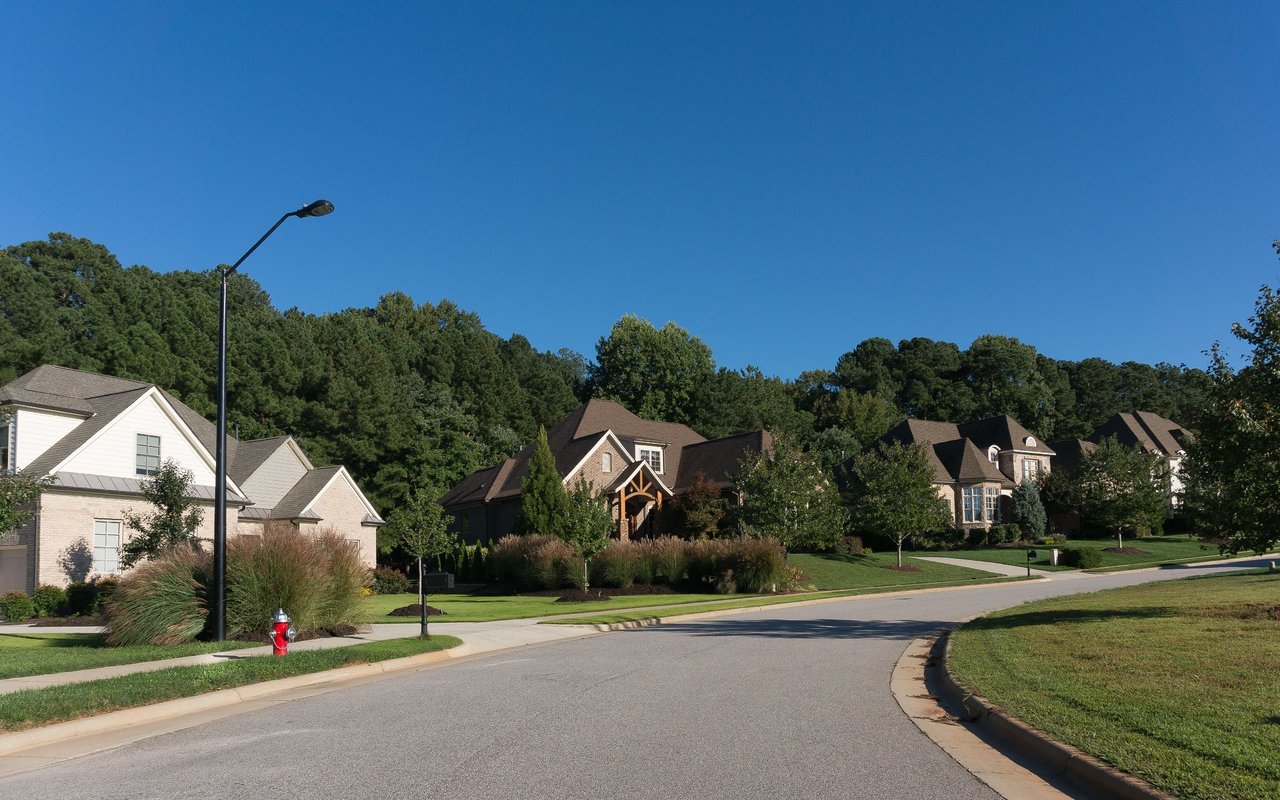
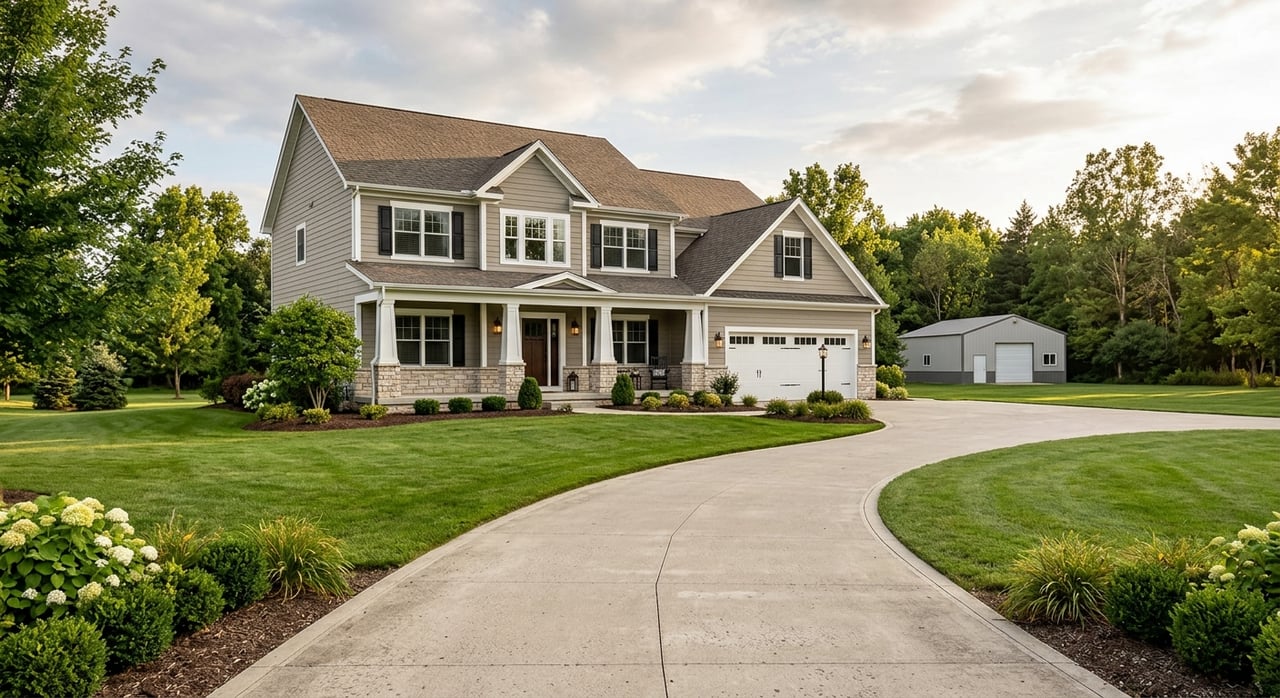
If you want more house and yard for each dollar, Alamance usually delivers. Newer neighborhoods around Mebane and western Alamance often offer lots between about 0.15 and 0.5 acre, with some premium sites over an acre. Builders have been active in the area, and new homes in Mebane commonly land in the mid $300s to $400s depending on size and features. You can preview a representative community example in Mebane from a regional builder here.
Older Burlington neighborhoods and historic mill‑era areas lean smaller on lot size and square footage, which can lower entry prices. On the other end, certain subdivisions near Mebane and in unincorporated parts of the county feature larger lots and higher‑end finishes. Across the board, the county’s price per square foot often runs in the high $100s, below many core Triangle neighborhoods.
The bottom line is simple. If your must‑haves include a garage, a real yard, maybe a bonus room or workshop, Alamance tends to provide more options at a given budget. If you prioritize walkable, in‑town neighborhoods and a very short commute, you will likely pay more in Chapel Hill, central Durham, or Raleigh.
A quick way to set expectations is to compare baseline commute figures. The U.S. Census reports mean travel times of about 25.6 minutes in Alamance, 22.9 in Durham, 23.8 in Orange, and 25.3 in Wake. These are county averages and not a door‑to‑door promise, but they help frame your likely commute exposure. You can review the county baseline data from U.S. Census QuickFacts.
For concrete examples, many Mebane residents commuting to Durham see roughly 23 miles and about 25 to 35 minutes in free‑flow conditions, with peak traffic adding time. You can check the Mebane to Durham drive distance here on Travelmath. Burlington to Raleigh is a longer trip, often around an hour or more depending on start and end points.
If you prefer not to drive every day, there are workable alternatives:
These multi‑modal options are most effective if your job site is near a transit stop or you can combine rail or express bus with short rideshares for the last mile.
Every family weighs lifestyle factors differently. Burlington and Mebane have growing downtowns, a strong retail corridor near the Tanger Outlets, parks, breweries, and lower overall density than many in‑town Triangle neighborhoods. The Triangle core offers larger medical centers, more university‑driven amenities, and denser, walkable areas. Both regions share access to greenways, lakes, and weekend trips across the Piedmont and mountains.
On schools, use a program‑by‑program lens rather than broad labels. Alamance‑Burlington Schools include standout options like the ABSS Early College, alongside schools with varying performance. Triangle districts such as Chapel Hill‑Carrboro and many Wake County schools often post higher average metrics, while Durham has strong specialty programs as well as variability. Always verify assigned school zones and review the specific programs that matter to you. You can learn about a program example at the ABSS Early College at ACC.
Property taxes and monthly carry costs also matter. North Carolina counties and cities set their own rates, and effective tax bills vary by municipality and special districts. The best move is to calculate a sample annual bill for any address on your shortlist using the county tax site. For statewide context on tax variability, see the Tax Foundation’s North Carolina overview.
For long‑term outlook, job growth in the Triangle has historically supported strong appreciation in Wake, Durham, and Orange. That growth has also lifted demand in Alamance, especially Mebane, thanks to I‑40 and I‑85 access. Market balance, local zoning, and future transit investments will shape appreciation, so take a long view and track regional updates like the 2026 Triangle forecast from Axios.
Use this checklist to pressure‑test your move before you write an offer.
Run your exact work address against a few Alamance listings at morning and evening peaks. If you plan to split modes, layer in park‑and‑ride options and schedules from Link Transit, PART Route 4, and NC By Train.
Line up a Triangle home and an Alamance home of similar size and age. Compare price, lot size, days on market, and a real monthly payment estimate to see which choice best fits your budget and time.
Do not rely on county averages. Confirm assigned schools for each listing and review the specific programs, academies, or magnet options that align with your priorities.
Pull the county and city rates for each listing and run a simple estimate. This is your annual baseline for escrow planning and is key if you are stretching on price.
If you want more space at a price that still fits, Alamance County can be a smart move. You will trade a bit more drive time in some cases, but many buyers gain a yard, a garage, and future flexibility without blowing the budget. The key is to test your commute, verify schools and taxes for the exact address, and compare apples to apples on price per square foot and lot size.
Ready to run the numbers on your shortlist and tour the best fits? Schedule a Free Consultation with Joshua Whitley to get local, technically informed guidance on neighborhoods, build quality, and financing tradeoffs.
Partner with Alamance County Realty for expert guidance, innovative marketing, and proven results. From first showing to closing, we’re committed to making your real estate journey smooth, successful, and stress-free.