July 9, 2026
If you have only thought of Elon as a college town, you may be missing what daily life here actually feels like. For many residents, Elon is less about campus headlines and more about easy routines, familiar local spots, green space, and quick access to bigger errands nearby. If you are considering a move, this guide will help you picture what everyday living in Elon, NC looks like beyond the university. Let’s dive in.
Elon had an estimated 11,282 residents as of July 1, 2024, which helps explain its smaller-scale, more connected feel. While Elon University is a major part of the town’s identity, local planning documents describe downtown as the community’s vibrant centerpiece for residents, students, and visitors alike.
That matters if you are looking for a place that feels active without feeling overwhelming. In practical terms, Elon works like a compact town with a clear daily center, not just a campus surrounded by housing.
A lot of Elon’s everyday rhythm centers around downtown, especially along North Williamson Avenue and West Lebanon Avenue. According to the Town of Elon’s Downtown Master Plan, that is where much of the main retail and restaurant activity is concentrated.
For you as a resident, that creates a simple pattern for day-to-day life. You can picture coffee, casual meals, community events, and quick meetups happening in the same familiar part of town throughout the year.
One of the easiest ways to understand Elon is through its food scene. Local options highlighted by Elon University include Pandora’s Pies, The Oak House, The Root, Tangent Eat + Bar, MaGerk’s Pub & Grill, Mediterranean Deli, and Smitty’s Ice Cream in downtown Elon.
That mix gives the town a real everyday restaurant loop. You are not relying on campus dining alone, and the town does not read like a place that pauses when students leave for breaks.
The Elon Farmer’s Market adds another layer to daily living. It brings together produce, flowers, bread, eggs, and rotating vendors, which gives residents another regular community gathering place tied to local routines.
Elon’s university presence often shows up as shared community activity rather than nonstop campus noise. The university hosts recurring events like College Coffee during the fall and spring semesters, along with performances, lectures, recitals, and art exhibitions on its cultural calendar.
There are also traditions that reflect the connection between town and campus. The Festival of Lights & Luminaries is presented as a shared Town of Elon and Elon University tradition, and downtown Elon hosts events throughout the year that are open to the community.
For you, that can mean having more to do close to home without feeling like your entire lifestyle has to revolve around student life. The town-gown relationship is visible, but it supports local life rather than replacing it.
Outdoor access is one of Elon’s strongest qualities for full-time residents. Elon University describes the town as offering two parks with walking trails and programming about five minutes from campus, and local planning documents identify several nearby recreation assets.
Beth Schmidt Park is one of the best-known everyday-use spots. Town documents list a playground, dog park, walking trails, picnic areas, and a community building there, which makes it useful for everything from a quick walk to a weekend outing.
Lawrence Slade Park adds another practical option with a playground, picnic areas, and a full-size basketball court. If you want more natural space, Shallow Ford Natural Area is a 190-acre county-owned site with hiking trails, camping, and paddle access.
Elon does offer walkable pockets, but it is important to keep that in perspective. The town’s 2024 Multimodal Network Plan says connected pedestrian routes are primarily in and around downtown.
The same plan notes a greenway on University Drive that connects Beth Schmidt Park and Twin Lakes to US 70. That can be a real plus if you value being near trails or linked outdoor routes.
Still, Elon is not fully walkable as a whole. According to the plan, only 12% of streets in the study area have sidewalks, and only 5% have sidewalks on both sides.
For buyers, this is one of those details that matters in real life. If being able to walk to coffee, parks, or nearby destinations is important to you, your exact location in town will make a big difference.
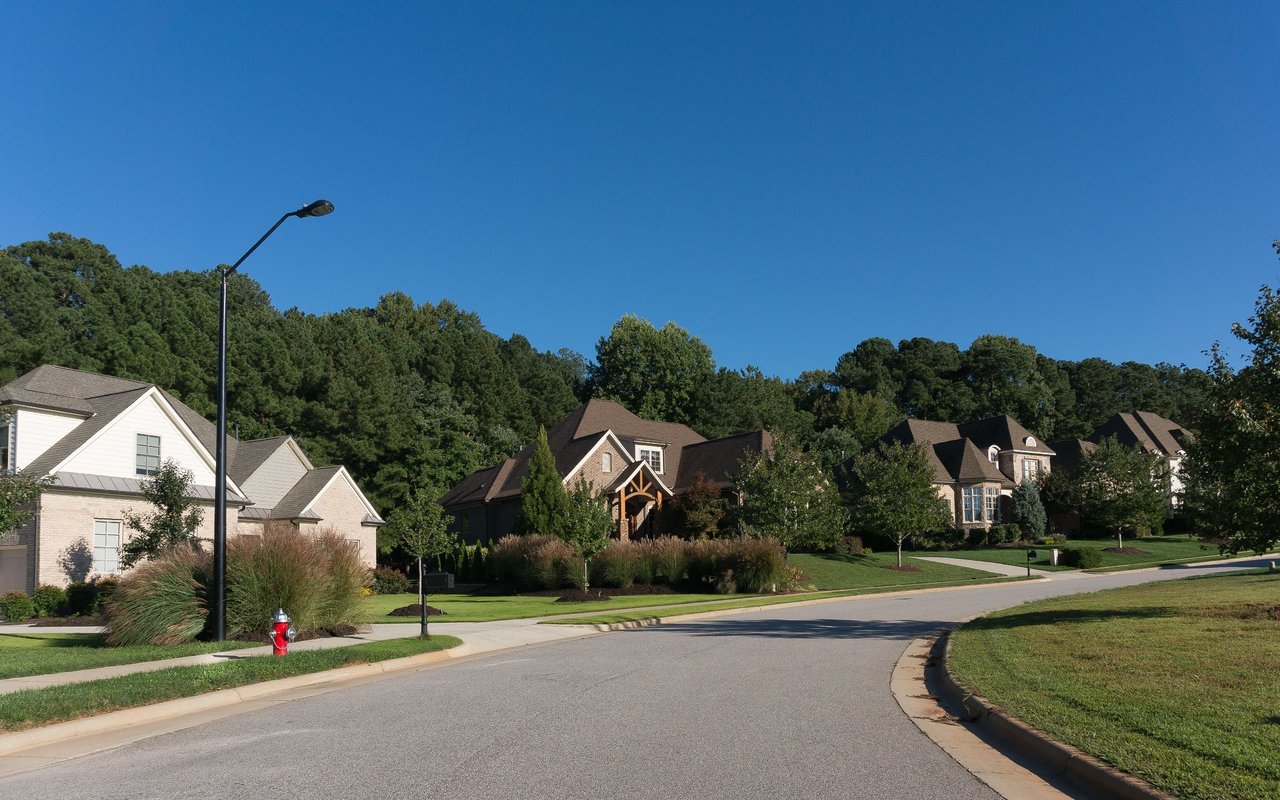
Elon’s housing mix still leans heavily toward ownership and single-family homes. Census QuickFacts reports a 70.1% owner-occupied housing unit rate, which supports the idea that Elon has a strong base of long-term residents.
The same source reports a median owner-occupied home value of $366,300 and a median gross rent of $2,080. Those numbers help set expectations if you are comparing Elon with nearby communities in Alamance County.
Town planning documents say single-family homes are likely to remain the dominant housing type. At the same time, townhouses and apartments are part of the local mix and help meet demand from retirees, downsizers, and young professionals.
That combination can appeal to different kinds of buyers. Whether you are looking for a traditional detached home or a lower-maintenance option, Elon is not limited to just one lifestyle pattern.
Part of everyday living in Elon includes how close you are to Burlington. Elon University says Burlington is about 10 minutes from campus, which gives residents easy access to larger shopping, dining, and recreation options.
For errands and retail, Alamance Crossing serves as an open-air shopping, dining, and entertainment destination. For outdoor recreation, Lake Mackintosh offers an over-1,150-acre reservoir with kayak and rowboat rentals, picnic sites, fishing, and boat ramps.
This nearby access changes how Elon functions on a daily basis. You can enjoy the smaller-town feel at home while still having larger amenities close by when you need them.
If you are considering buying a home in Elon, the biggest takeaway is that lifestyle can vary a lot by location. A home near downtown or the University Drive and Williamson Avenue corridor may offer easier access to restaurants, events, and walkable pockets.
A home farther from those areas may feel quieter and more car-dependent. Neither is automatically better. It depends on how you want your day-to-day routine to work.
This is where local guidance matters. When you are comparing homes, it helps to look beyond square footage and price and think about how often you want to reach parks, dining, greenways, and Burlington amenities.
The best way to describe Elon is simple: it feels like a real town first, with a university woven into it. The downtown dining cluster, community events, parks, and nearby Burlington access all support year-round living.
That is a big reason Elon stands out for buyers who want a smaller community with local character. You get activity and convenience, but you also get a place with a steady residential rhythm.
If you are trying to decide whether Elon fits your lifestyle, it helps to view it through that lens. It is not just a university setting. It is a compact Alamance County town with practical everyday appeal.
If you want help comparing neighborhoods, housing options, and day-to-day lifestyle in Elon, Joshua Whitley can help you make a clear, informed move.
Partner with Alamance County Realty for expert guidance, innovative marketing, and proven results. From first showing to closing, we’re committed to making your real estate journey smooth, successful, and stress-free.